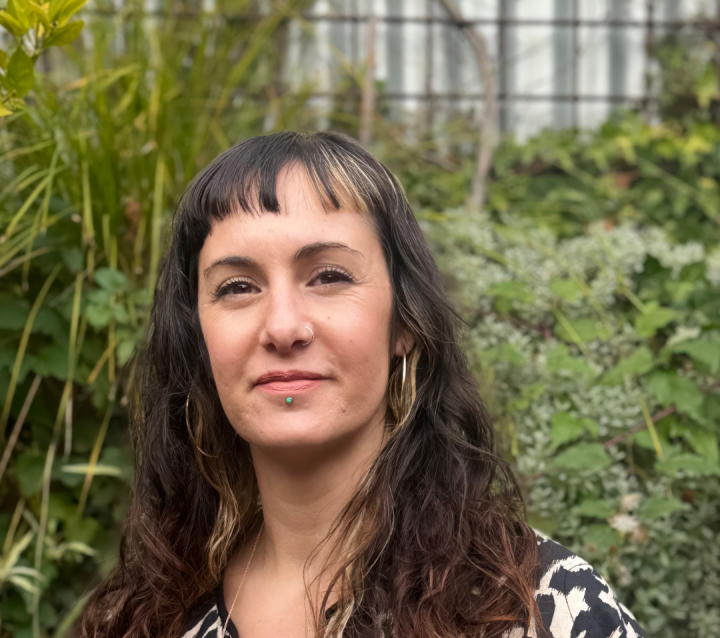
Please tell us your story! How did you get to where you are today?
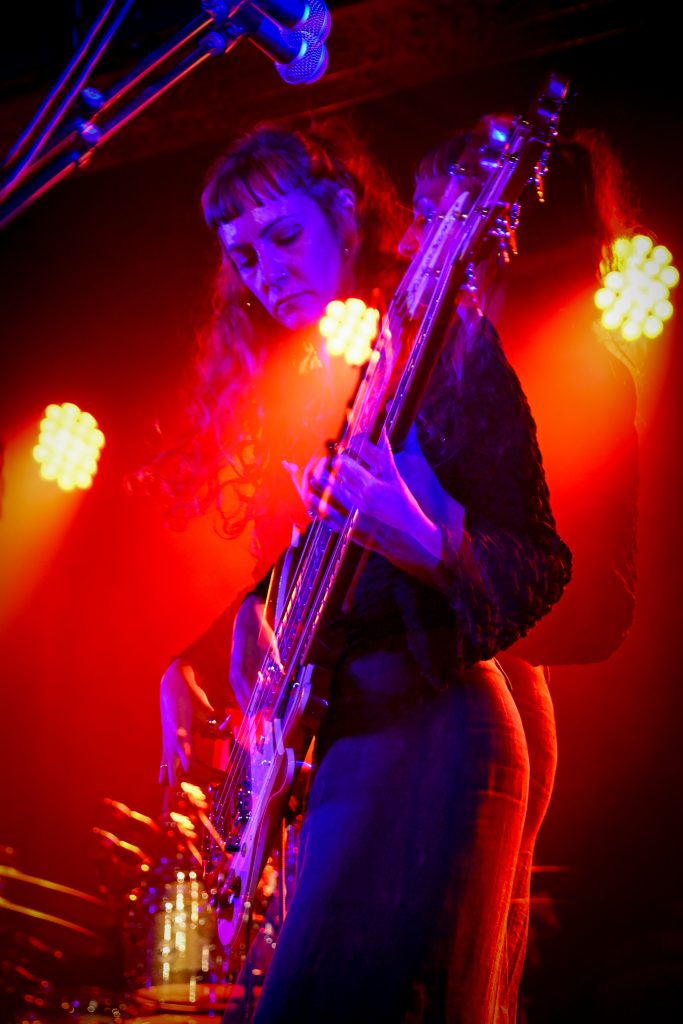
I’ll try to keep it short! Music was influential in my teenage years. The lyrics, energy and aesthetic of grunge and rock spoke strongly to me. I took up bass guitar, started playing in a band then managing our bookings and online presence. At 16 I knew I wanted to work in music. From 20 I started organising gigs and house parties, DJing at alternative clubs and bars, playing in noise and psych bands. I started curating and promoting immersive shows in warehouses in Sydney as ‘Octopus Pi’ and worked at FBi Radio managing their music venue, being a part of the programming team and hosting radio shows. I booked a larger venue and picked up marketing, ticketing, production experience and eventually worked for a festival (that shall not be named, but has been rightfully called out in the news) as the Head of Touring promoting and organising tours for 20 internationals a year. I saw Dark Mofo as the ultimate festival to work for. A return to my roots in experimental, cutting-edge, dark and conceptual music and culture. And the rest is magic.
Tell us about your current role and professional life, what does your day-to-day entail?
I’m the Music Director for Dark Mofo, as well as the Associate Creative Director for DarkLab (a new role I took on a couple of months ago). It’s my job to know everything that’s happening in music (whether it’s breaking European sounds, or Australian heritage acts..) and have relationships with all of the agents, promoters and artists – which isn’t hard, as most people in the industry are passionate and easygoing.
Along with my team (Sam, Keira and Deb), we program the Odeon, Altar Bar and In The Hanging Garden precinct in Hobart year-round. So I’m always buying shows, developing our events and venues, running budgets, researching; looking at creative opportunities to grow our business and bring quality music to Hobart. Last year I booked the Hobart Festival of Comedy. The year before I styled and renovated Altar Bar. At the moment I’m working on a new club-space concept. I feel like the stimulation of a varied workload and projects works for me, but Dark Mofo is my main passion. I feel privileged to be able to curate a program of experiential music, with artistic intent – not just to satisfy a budget line. There are so many artists I’m still excited to bring to Australia.
Why did you want to get into the music industry?
I love being affected by music, but maybe even more I love witnessing other people be affected by music. Particularly in a live setting. Organising events, platforming unique artists and sharing the magic with others brings me immense joy, sometimes to the point of tearing up! It’s a powerful peak emotional moment. I want to connect the artist with the audience, that’s my job. Then I stand there and watch and listen and dance and cry.
“I want to connect the artist with the audience, that’s my job. Then I stand there and watch and listen and dance and cry.”
Do you feel that higher education is a necessary step to enter the music industry?
No, is my strong opinion. I studied Music Business at TAFE straight out of High School, which provided a good overview of how things work at a dirt cheap price (at the time), but it was the energy I put into getting things off the ground myself that gave me the skills and network that got me somewhere. Unfortunately I feel like almost all institutions stifle creativity and expression and narrow an individual’s perception of what to do, how to do it and what success looks like. Each person should forge their own path, grow or participate in their own communities, be hands on. DIY culture is better than any classroom.
“DIY culture is better than any classroom.”
Tell us about some of your favourite programming moments in your career – any highlights or bookings you’re really proud of?
In my first year at Dark Mofo, in the midst of the pandemic, I managed to talk Thurston Moore and OM into flying to Australia and quarantining for two weeks in order to perform exclusively for us – this was June 2021. Money talks for sure, but that was a big leap of faith on their part. I was 6 months pregnant and Thurston’s wife Eva (one of the loveliest people I’ve ever met) bought me a baby blanket. It was a surreal time.
What are you looking for when you’re programming artists for Dark Mofo, especially AU/NZ acts? And what’s the best way an artist can put themselves on your radar?
The biggest thing is having conviction and a unique quality in their sound, live performance and identity. Because Dark Mofo is purposefully experiential I’m looking for that magical total package. They don’t particularly have to be signed to a label or agent, I value independent artists, but I do keep an eye on line-ups and releases, and some level of exposure or hype reinforces their calibre. We don’t have a formal application process, my email is easy to work out and I listen to everything that comes in; video is especially useful. Spots in the main program are limited, but events like Night Mass (not booked by me) are great for providing wider opportunities for AU and NZ artists, over 100 each year.
Who are your top picks to see at Dark Mofo this year?
We are half way through our 2026 edition now! Snapped Ankles were incredible last night, had the Odeon heaving. Purity Ring’s show earlier was gorgeous. I’ve had so many highlights. Chat Pile and Iglooghost blew me away, Daniel Avery, Clipping, Danny Brown, Nina Utashiro, Gabber Eleganza… it has been a phenomenal level of talent. This week… Sega Bodega is probably who I’m most excited about, I’ve been working on presenting him for five years. And Lord Spikeheart is going to be brutal and intense, I’m all for it!
I’m one of the rare (only?) people who gets to catch every single show, and each artist scratches an itch, so I feel lucky to experience the full breadth of it.
“It’s our role as creators and custodians of music and art to aid their evolution, and the expression of our species.”
What issues/potential issues do you think the current Australian music industry faces? Specifically in your realm of work.
I’m reading a book at the moment, mostly about the science of plants and ecosystems and their way of evolution, and it quotes Einstein continually, he said “We cannot solve the problems facing us by using the same kind of thinking that created them”. I feel like it can be applied to many situations and industries. For music – whether it’s festivals, venues or creators… what worked 20, 10, 5 years ago is not the same for today. We can lay blame on changing factors (economy, tastes, technology) or, we can adapt to the changing times. I think the solution is to be found in getting out of our comfort zones, being innovative. It’s our role as creators and custodians of music and art to aid their evolution, and the expression of our species.
What is the current musical landscape like where you live?
Hobart punches way above it’s weight in quality bands! Every time I see another band they become my new favourite – last week it was Sheepwater. There are really four mid-sized permanent venues for independent bands here – Altar Bar (which we run) Twisted Lime, The Grand Poobah and The Republic, so it’s limited, and yet there are so many talented bands pumping out would-be classic hits and hilarious stage shows regularly. Hobart has it’s own unique flavour of post-punk, which I personally love, but every genre is represented. I don’t know how I can stress more the quality of the bands in Hobart! Can I swear? Agents and managers – get down here! If I wasn’t doing this job I would be the agent/manager of about twenty bands right now.
“I don’t know how I can stress more the quality of the bands in Hobart! Can I swear? Agents and managers – get down here!”
What has been your proudest achievement so far?
I received the Australian Women in Music Award for Creative Leadership last year, that was an incredible honour.
How do you unwind when you’re stressed?
I recently completed a year’s training course to become a Qigong instructor because I wanted a regular practice to help manage stress and drop down after an anxious day, and to better understand the theory behind the forms. It’s an ancient Chinese moving meditation based on meridian energy lines and breathwork; which helps with all kinds of physical and mental imbalances. It will become a lifelong practice for me. I also go bushwalking as often as I can.
How do you manage work/life balance?
Day by day, by spicing up the domestic routine. I have a four year old daughter and partner, so family is first. Work can be demanding, and I have a lot of personal interests that are an essential part of me. Unless it’s peak work time (festival announcements etc), I avoid checking my emails on the weekend or evenings and keep a clear line between work time and family/me time. My favourite moment is reading before I go to bed. I have stacks of books on my bedside table that I want to devour (and 3 in the mail at all times). They cover some pretty far-out topics that take me out of the daily routine and fuel my passion for life.
What is your go-to Karaoke song?
This was tough to narrow down. Let’s get wild – Poison by Alice Cooper.