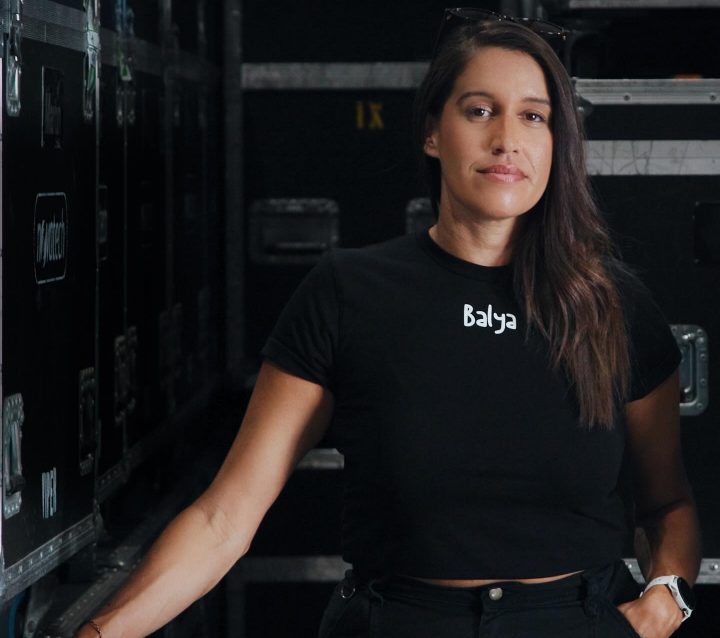
Please tell us your story! How did you get to where you are today?
I’m a proud Kokatha, Wirangu and Mirning woman from Ceduna on the Far West Coast of South Australia, now living and working on Kaurna Yerta. Music has always been part of my life. I studied at the Centre for Aboriginal Studies in Music (CASM), initially as a performer and sound engineering student, but I quickly discovered my passion was behind the scenes.
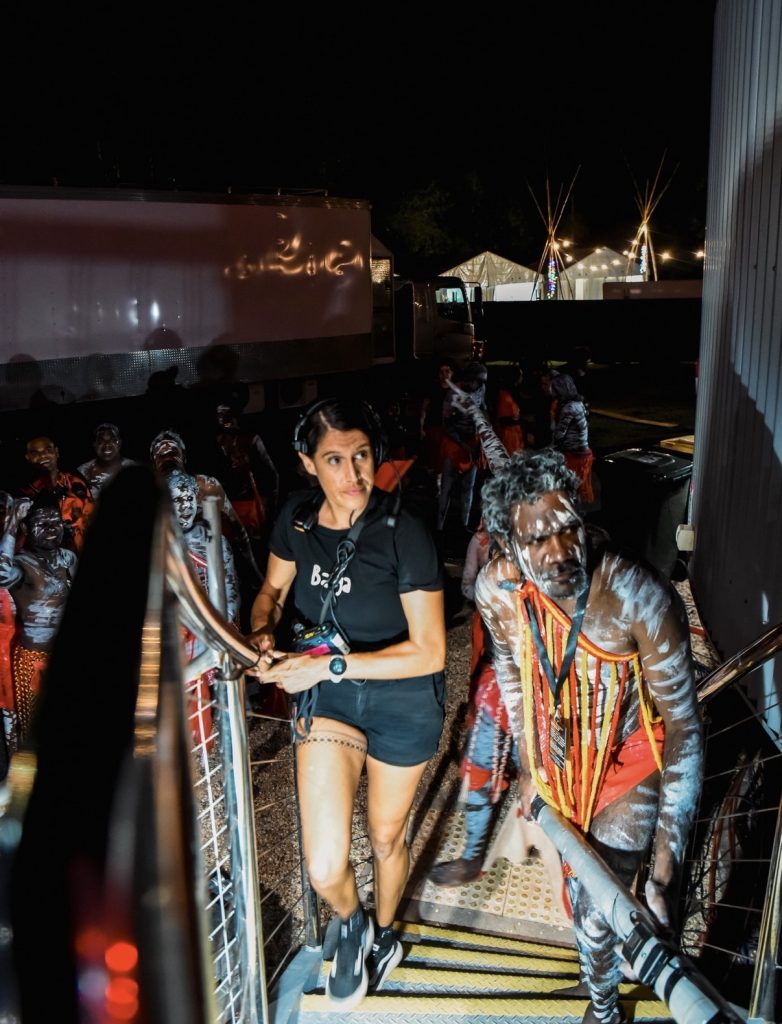
Over the past 18 years I’ve built a career across live music, touring, festivals and major events, working my way from local productions to some of Australia’s largest music events. Along the way I noticed there were very few First Nations people working in technical and production roles, particularly women. That experience ultimately led me to establish Balya Productions, a First Nations-led production company focused on creating opportunities and pathways for the next generation. Everything I do today is driven by the belief that we can’t be what we can’t see.
“We can’t be what we can’t see.”
Tell us about your current role and professional life, what does your day-to-day entail?
No two days are ever the same. Depending on the week, I might be stage managing a national music festival, tour managing an artist, developing workforce programs, mentoring emerging crew members, managing event logistics or sitting in meetings discussing industry policy and workforce development.
As Director of Balya Productions, I oversee projects nationally, with a strong focus on creating employment pathways for First Nations people in live music and production. I also continue to work directly in the industry as a production and stage manager because staying connected to the frontline helps me understand where opportunities and challenges exist.
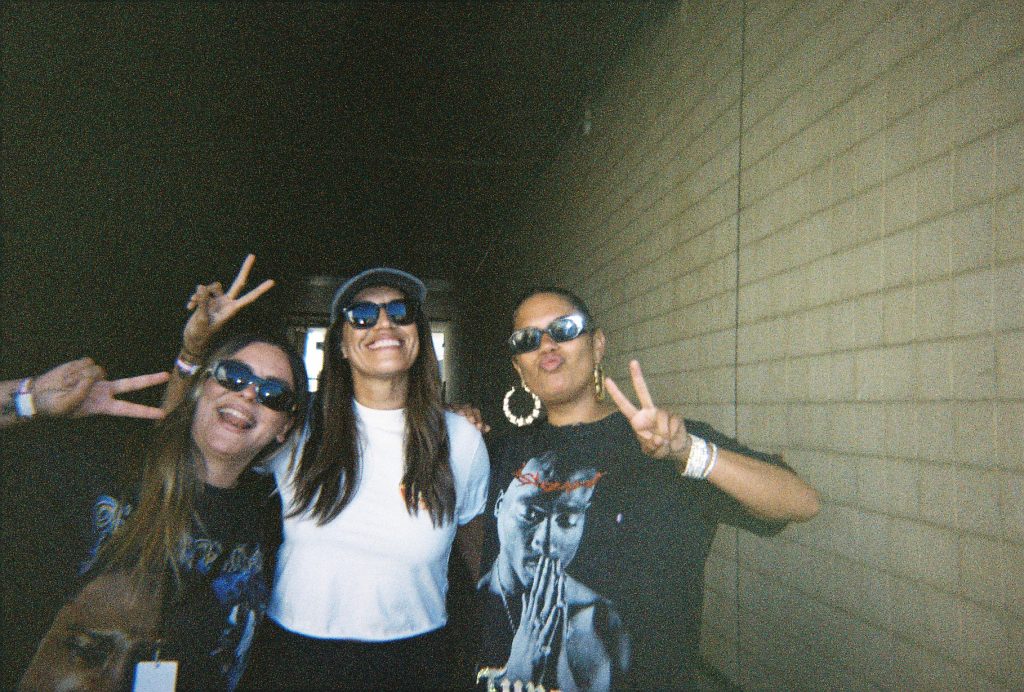
What issues do you think the current Australian music industry faces? Specifically in your realm of work.
One of the biggest challenges is workforce sustainability. We spend a lot of time talking about artists, which is important, but there are thousands of people working behind the scenes who make live music possible.
For First Nations people, there are still limited pathways into technical production, touring, stage management and event delivery. We need greater investment in workforce development, mentorship and long-term career pathways. Representation on stage has improved significantly, but we still have work to do behind the scenes.
“Resilience isn’t about doing everything alone; it’s about building strong networks and asking for support when you need it.”
If you could change one thing in the music industry right now, what would it be?
I would increase investment in people.
The industry often focuses on events and outcomes, but sustainable change comes from developing the workforce that supports those outcomes. I would love to see more long-term investment in training, mentoring and employment pathways, particularly for First Nations people, regional communities and underrepresented groups.
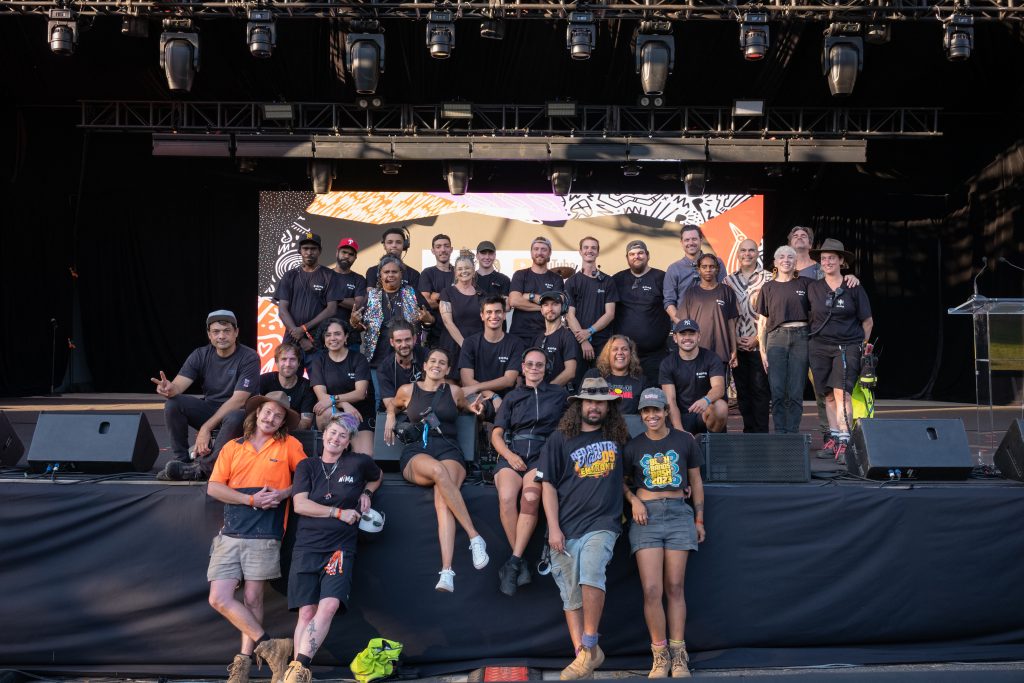
Have you had to overcome any challenges or adversity in your career, and if so, how did you approach them?
Absolutely. Being a First Nations woman working in live production hasn’t always been easy. There have been many situations where I was the only Aboriginal person, the only woman, or both, in the room.
I’ve also had to navigate burnout, self-doubt and the pressure that comes with carrying cultural responsibilities alongside professional responsibilities. What has helped me most is staying connected to community, knowing my purpose and remembering why I started. I’ve learnt that resilience isn’t about doing everything alone; it’s about building strong networks and asking for support when you need it.
“Seeing First Nations crew members gain confidence, secure employment and build careers through programs I’ve developed is what makes me proudest.”
What has been your proudest achievement so far?
Without hesitation, it’s creating opportunities for others.
Awards and recognition are wonderful, and I’m incredibly grateful for them, but seeing First Nations crew members gain confidence, secure employment and build careers through programs I’ve developed is what makes me proudest.
Knowing that someone has entered the industry because they saw a pathway through Balya Productions is far more meaningful to me than any individual achievement.
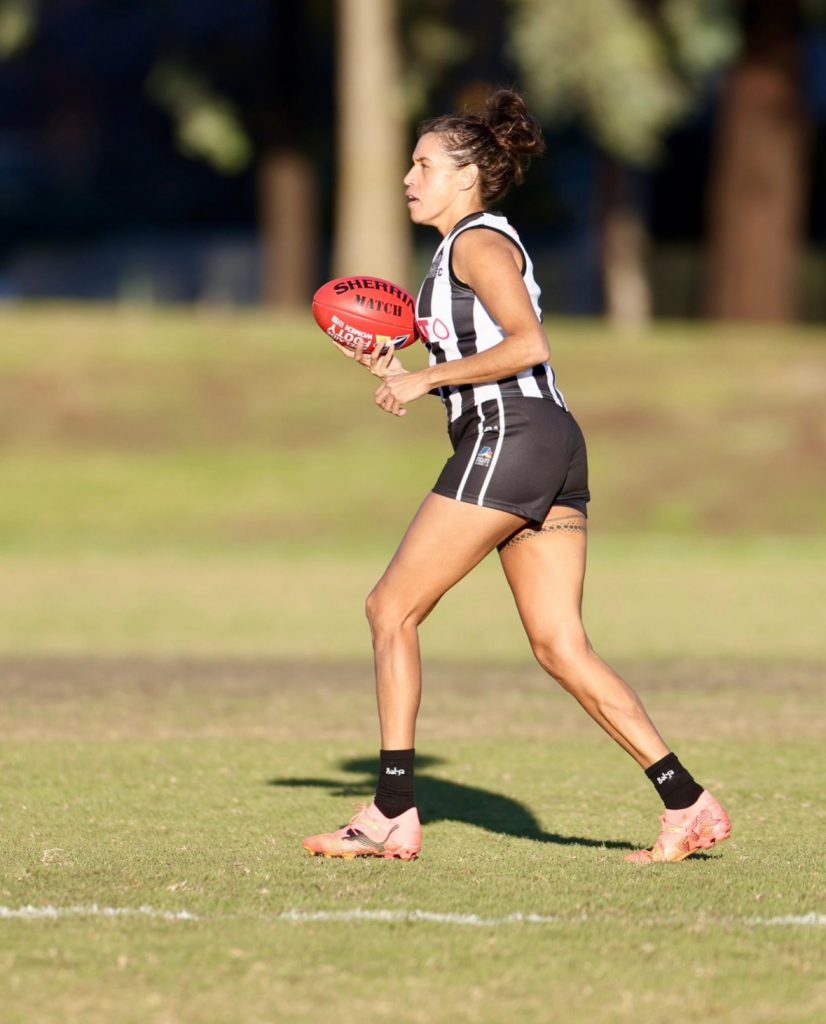
Who has been your biggest champion in your career?
I’ve been fortunate to have many champions throughout my journey.
My family and community have always believed in me, but professionally I’ve benefited from people who opened doors, shared knowledge and trusted me with opportunities before I felt ready. I’ve learnt that success is never achieved alone, and I’m grateful for the mentors, colleagues and friends who have supported me along the way.
“Stop worrying about fitting in. The things that make you different are the things that will eventually become your greatest strengths.”
What would you tell your younger self if you could tell them anything?
Stop worrying about fitting in.
The things that make you different are the things that will eventually become your greatest strengths. Trust your instincts, back yourself more often and don’t be afraid to take up space.
I’d also tell her that the path won’t always make sense in the moment, but every experience will teach you something valuable.

What is your big picture career goal?
Retire Early haha! My long-term goal is to create a nationally recognised First Nations workforce development ecosystem for the Australian music industry.
I want to see more First Nations people working as stage managers, production managers, technicians, tour managers and festival producers across the country. I want young people to see these careers as achievable and accessible.
Ultimately, I want to leave the industry stronger, more inclusive and more representative than when I entered it.
“We’re moving from talking about change to actively creating it.”
What does the rest of the year hold for you? Anything exciting you can tell us about?
This year is shaping up to be one of the busiest and most exciting of my career.
Balya Productions has recently launched the First Nations Music Workforce Development Program in partnership with Music Australia and APRA AMCOS, which will create paid pathways and mentorship opportunities across the live music industry and gig’s we are engaged in already! I’ll also continue working on major festivals, national touring projects and workforce development initiatives throughout the year.
It’s an exciting time because we’re moving from talking about change to actively creating it.
What is your go-to Karaoke song?
Fast Car by Tracy Chapman
This song has always been special to me. With encouragement from my mum and support from the local language centre in Ceduna, we translated it into language because I could play the guitar and sing. It wasn’t easy, but it strengthened my connection to culture, language and music. Most people closest to me think of me when they hear it, and some even say it’s their favourite version! Haha.
Say my Name by Destiny’s Child would be my second choice.
You can here a small snippet for Letisha’s version in language HERE.