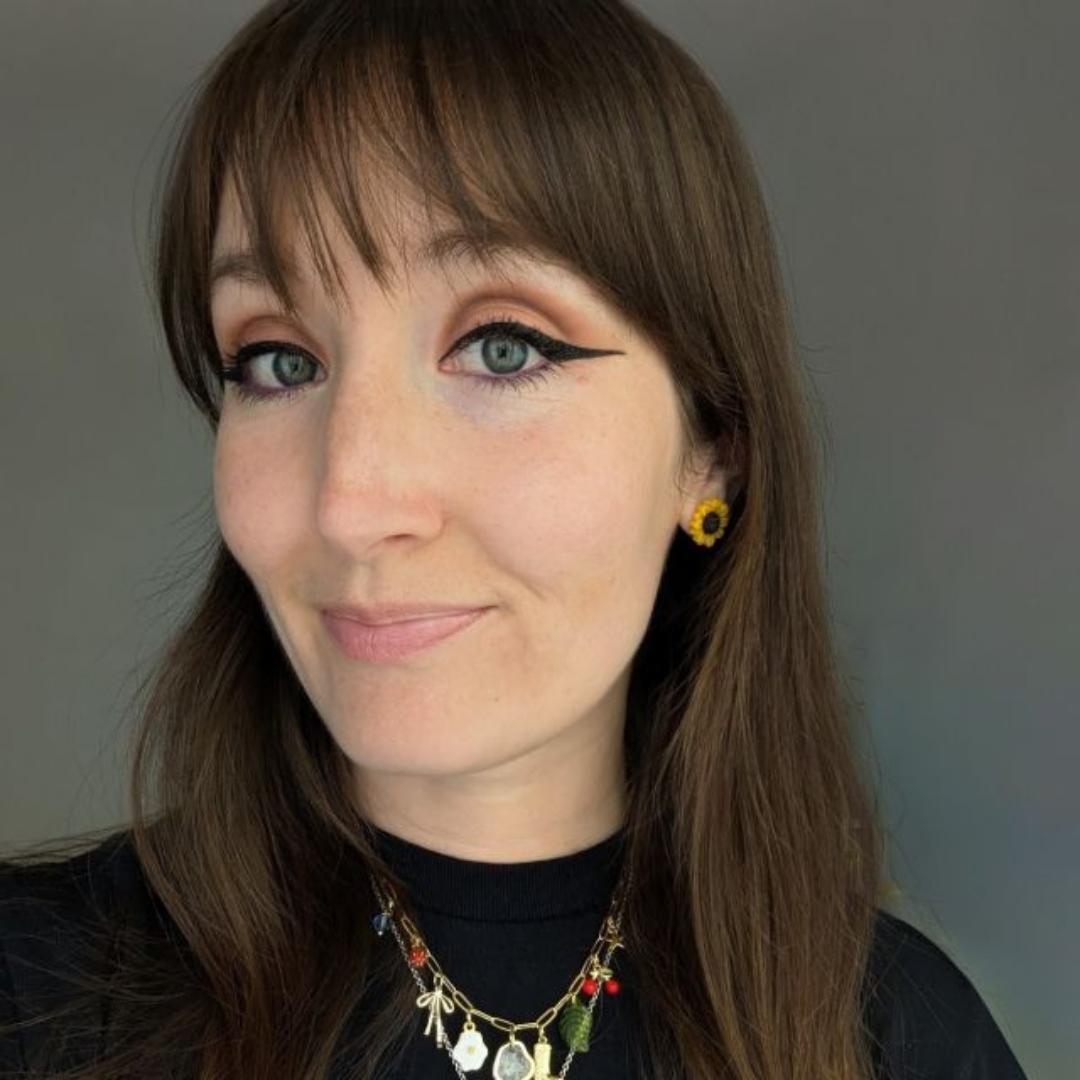
Please tell us your story! How did you get to where you are today?
While attending college in Boston for writing, literature, and publishing, I got involved at my school’s radio station and booked an internship at DigBoston, the city’s local alt-weekly newspaper. I spent my free time trying to learn about every band, making playlists for friends, and going to concerts and basement shows, but I had no idea how to get involved in music journalism. The arts & entertainment editor at DigBoston started assigning me all sorts of album reviews and interviews with local bands, and I couldn’t get enough of it. She recognized that enthusiasm and encouraged me to keep growing it, which I’m forever grateful for.
My senior year of college, I started cold emailing music publications with pitches for album reviews and interviews, but omitted that I was a college student out of fear they wouldn’t take me seriously. With those DigBoston newspaper clips under my belt, I ended up landing my first few freelance projects. I told myself I would keep pitching ideas as long as editors granted me the opportunity to write. Since then, it’s been a constant swinging motion from one publication to the next on staff—Pitchfork, Consequence, DigBoston—or contributing as a freelancer—Rolling Stone, NPR, Stereogum—a bit in disbelief that it’s lasted this long. I’ve been contributing to Pitchfork as a freelance music journalist since 2015, and I officially joined as an associate staff writer in 2021.
“Ambition and drive are equally palpable to editors as they are to readers.”
How did you get your start in the industry? Any advice for people wanting to work in your field?
Some music critics tell aspiring journalists to give up and choose a different career, but I’m not that pessimistic. Does music criticism still matter? Yes, no doubt. Does music journalism as a proper career still exist? Yes, but there’s very few publications left standing that offer full-time jobs in the field. Will you have to take on side jobs while writing? Yes, unless you’ve got financial help or live in a country whose government helps fund the arts through grants. Most of the music journalists still writing today work full- or part-time jobs in addition to freelancing, myself included. If you want to write music criticism, do it and don’t let this false idea of needing to secure one of those few jobs stop you. Ambition and drive are equally palpable to editors as they are to readers, and anyone you’re pitching stories to should pick up on that. Just set your expectations accordingly.
As far as specific roadbumps you’re running into or questions you can’t find answers to, don’t be afraid to reach out to a music journalist whose opinion you respect. Most of them are happy to share a few minutes of their time to help, so long as you ask specific questions and make it clear you’ve done some research on your end already. (Don’t ask who to pitch at their publication when mastheads exist, or something vague like how to succeed in the industry.)
“The best pieces of writing choose an angle and focus on the richness of its details. Don’t waste your time trying to summarize everything noteworthy; it’s impossible — or, worse, it’s boring.”
Let’s talk about the highs vs the lows of your career. What is your greatest achievement? And are there any moments you would like to share that you learnt greatly from?
As the great Jill Mapes just wrote recently, there’s no justifiable explanation for why so many of the best music journalists in the business have been laid off in recent years; none of this is their fault. My greatest achievement isn’t really up to me, in that so much of it comes down to luck: I feel deeply lucky that I’m still writing about music for my day job and still writing about music as a freelancer in my spare time. I wanted to ride the wave of opportunity as long as it crested. A decade later, be it by blind luck or foolish obstinance, that wave is still beneath my feet whenever I look down, even if the shore is drawing closer.
One of the most humiliating moments of my career was largely in private and certainly served as a learning experience. I was offered space to review Joanna Newsom’s album Divers for Fact Mag in 2015 and eagerly accepted the assignment and its brief 72-hour turnaround window. I ended up gushing about every aspect of the album—lyrics that doubled as puzzles, the lavish compositions with collaborators, the grandiosity of trying to encapsulate time itself—while is a fool’s errand, no matter how much talent or time you have on your hands. The editor who assigned the review ended up pulling it. I believe their line was, “There’s too much here to rework, and editing it would require days, not hours, so it’s faster to scrap it entirely. Sorry.” I was mortified. In the following months, I realized that it never would have worked because I couldn’t find my own throughline in Divers. The best pieces of writing choose an angle and focus on the richness of its details. Don’t waste your time trying to summarize everything noteworthy; it’s impossible — or, worse, it’s boring.
“Artists pour so much time and creative energy into their music; they deserve to have it be met with a thoughtful reflection that respects that time.”
Music criticism has got a lot of noise around it right now – what do you think its role actually is in 2026?
It’s infuriating and depressing to see out-of-touch corporate leaders shutter entire publications or lay off their staff without understanding why these outlets exist in the first place. No matter what year it is or how technology has evolved, music fans will always crave new music, live concerts, and the experience of deepening their relationship to a record. Music criticism helps people understand why they’re drawn to (or put off by!) a record or song. It’s more than a recommendation tool or a listicle, although there’s certainly merit in that type of service journalism. At a time when AI can spit out a generic summary of what other fans are thinking or describe the genre of music that an artist made, music criticism cuts through the noise with a thought-out argument, analysis, or opinion to connect the dots the way that only a human eye can do. You know it when you’re reading a piece like that, where your perspective is broadening in real time. Artists pour so much time and creative energy into their music; they deserve to have it be met with a thoughtful reflection that respects that time.
“At a time when AI can spit out a generic summary of what other fans are thinking, music criticism cuts through the noise with a thought-out argument, analysis, or opinion to connect the dots the way that only a human eye can do.”
Who are 3 artists you think Australia should be watching?
Not to beat a dead prized horse, but I am a huge fan of the Lismore band Media Puzzle and have written about them several times now. Their frontman Tom has such a knack for these massive, sparkling, gleeful hooks that carry the perfect mix of breeziness and groove. New Racehorse is one of my favorite albums of 2026 so far and I’m still not tired of it despite repeat plays. Sometimes I rewatch this video just to baffle over how good they sound in an elevator, of all places.
Australia has some of the best hardcore bands in the world right now, and Kissland are one of the standouts that I wish were even bigger. Girls Mignon, their sophomore album from last year, is a blistering bundle of thrash that’s only 8 minutes long, but they package a bunch of gnarly riffs, one seriously pub-worthy guitar solo, and some of the toughest shrill screams you’ve ever heard into one perfect record. Melbourne is lucky to have them in their backyard.
I’m also waiting for Ritual Disorder to get their due. They’re a post-punk quartet from Brisbane City with a very cold, ’80s, gothic approach to the genre. Their self-titled EP came out in January and is full of charisma and confidence. I love how their singer’s voice draws you in like a trusted confidant in one verse and then holds you at arm’s length during a chorus right afterwards.
“A decade later, be it by blind luck or foolish obstinance, that wave is still beneath my feet whenever I look down.”
You co-host Punk This Week alongside your writing – what made you want to bring your music coverage into an audio format, and how does hosting a podcast change the way you think or talk about music compared to writing a review?
In 2024, my former Pitchfork coworker Evan Minsker formed See/Saw, which is, in my opinion, the definitive newsletter about modern punk and rock. He asked if I wanted to start a See/Saw podcast with him to talk about our favorite records that come out each week, and although I initially hesitated due to the pile of work on my plate, we decided to give it a whirl and it’s been nonstop ever since. Hopping on a call with him every week to rave about the albums we’re listening to is a joy, especially because it just feels like we’re hanging out.
As a music journalist and critic, you spend hours combing over your word choices for precision, clarity, and ideally accurate insights into an artist’s work. It’s pretty exacting. By comparison, talking on a podcast allows me to discuss music in a far more fast and loose manner. There’s no time to overthink phrases or worry about repeating an idea my past self has said. If anything, co-hosting a podcast with Evan has helped me lower the stakes of my music analysis and, in the process, reopen pathways in my brain for discussing music that lifts some of the pressure and makes for clearer points. Plus, podcasting is filled with laughter! A lot of the music writing I do is through an enthusiastic but serious lens, whereas talking on a podcast is low-key and silly. Ultimately, it helps me approach both forms of music coverage with a refreshed state of mind.
What is your go-to Karaoke song?
Much to the dismay of my friends here in Chicago, I hate singing at karaoke but love going to cheer them on. Attention of any kind makes my skin crawl, especially in front of a crowd where people—strangers or friends—are watching you. But when someone picks a song that has gang vocals or shouted parts, like in “Short Skirt Long Jacket,” I love joining in. Now, singing in my car? That’s a different story.