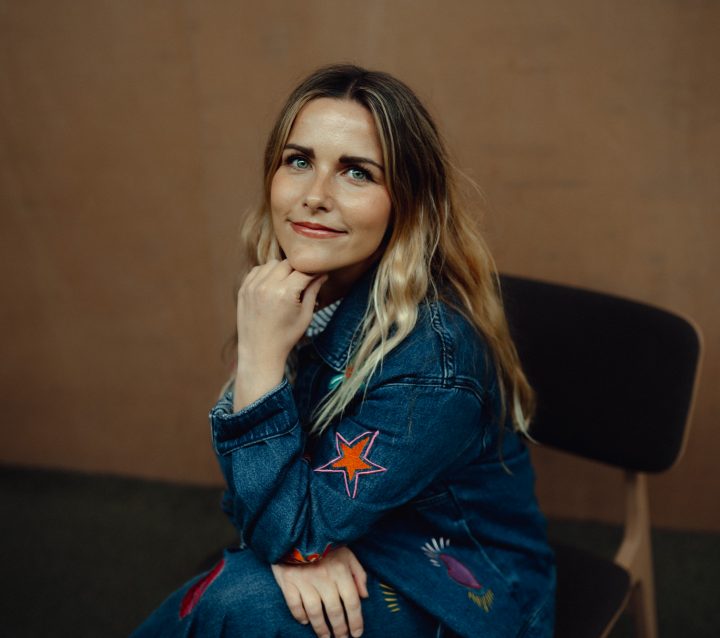
Please tell us your story! How did you get to where you are today?
For as long as I can remember, music has been a constant in my life. Growing up, I’d wake up to the sound of vinyl spinning through the house as my dad blasted his record collection, most memorably Bob Marley’s Kaya. Music was always the backdrop.
As a kid I was equally obsessed with dance, spending most weekends competing in eisteddfods across tap, jazz, classical, contemporary and song & dance. Being immersed in music through movement only deepened my connection to it. In high school I picked up the drums, got involved in musical theatre, and thought for a moment I might pursue life on stage – until reality hit and I realised my place in music might be somewhere else.
The turning point came when I met someone studying Music Business at RMIT. I remember thinking: wait… that’s an actual career? From that moment on I was determined to find my way into the industry.
It wasn’t exactly a straightforward path. I worked seven days a week while studying via correspondence at Berklee College of Music and threw myself into every opportunity I could find – volunteering at Melbourne Music Week, working on reception at PBS FM, attending seminars through The Push, and eventually landing two internships as a publicist at Secret Service PR and marketing coordinator at Vicious Recordings.
That persistence paid off. I joined Secret Service PR full-time and spent six years working on some of Australia’s biggest festivals – including Falls Festival, Download Festival and Yours & Owls – alongside major tours for artists like Lana Del Rey, The 1975, Liam Gallagher and Lewis Capaldi, as well as album campaigns for Sam Fender, Mumford & Sons and Bloc Party.
When the music industry shut down in 2020 and I was made redundant, I decided to take a leap and launch my own agency, Great Company Collective. It felt like a risk at the time, but sometimes the biggest moments come from backing yourself.
Building the business hasn’t always been easy, but it has been one of the most rewarding decisions I’ve ever made. Today, GCC works alongside artists, festivals and creative brands to help tell their stories, build lasting careers, and create meaningful cultural impact.
And for me, it all still comes back to the same thing – a lifelong love of music and a deep admiration for the people who make it.
” It’s about understanding where culture is happening and helping artists be part of those conversations in meaningful ways. An algorithm might introduce someone to a song, but it’s storytelling and context that turn that moment into a real connection with an artist.”
Tell us about Great Company Collective, what does your day-to-day entail?
No two days ever look the same. I can plan out a day (or even a whole week) but the nature of PR is incredibly reactive, so things can change in an instant. It’s a fast-moving environment that requires flexibility, quick thinking and the ability to adapt on the fly. One day I might be in back-to-back meetings, the next pinned to my laptop pitching stories and chasing media, or out with a client doing promo. It could mean heading to a live show, being on-site at a festival, or coordinating media calls with ministers, government offices and key creative arts bodies.
That’s what I love most about the job – the pace, the unpredictability and the intensity of it all. It keeps you on your toes, and I think I really thrive in that kind of high-energy environment.
My favourite days are always the ones spent out with clients on promo or seeing them perform live, because that’s when you really get to connect with the people you’re working with and witness the impact of everything happening behind the scenes. Of course, there are also plenty of days spent at my desk making it all happen, but those are the moments that ultimately build towards the bigger picture.
What issues/potential issues do you think the current Australian music industry faces? Specifically in your realm of work.
There are a few big challenges facing the Australian music industry at the moment, particularly when it comes to visibility and sustainability for local artists. One of the biggest shifts I’ve seen is the changing media landscape. Many traditional music publications have closed or reduced their music coverage over the past decade, which means there are fewer dedicated platforms telling the stories of Australian artists in the way they once did.
At the same time, the digital ecosystem has completely transformed how music is discovered. Artists now have incredible opportunities to reach audiences directly through platforms like TikTok and streaming services, but it also means the landscape is far more crowded and attention spans are shorter than ever. Algorithms can drive huge moments of discovery, sometimes overnight, but they often reward speed and virality rather than long-term artist development.
In many ways, it means the role of a publicist has had to evolve. The job has moved beyond simply pitching traditional media to working with artists on how their stories are told – thinking about feature angles, creative strategies and where those conversations can live. That now spans everything from podcasts and newsletters to content creators and Substacks, alongside radio, print and digital outlets. It’s about understanding where culture is happening and helping artists be part of those conversations in meaningful ways. An algorithm might introduce someone to a song, but it’s storytelling and context that turn that moment into a real connection with an artist.
The opportunity now is to keep evolving the ways we champion Australian music, making sure our artists continue to be seen, heard and supported both locally and internationally.

Have you had to overcome any challenges or adversity in your career, and if so, how did you approach them?
Ooooh boy, have I ever! Launching a business during a pandemic was a little bit mad – at the time we didn’t even know if live music was ever going to come back and the whole industry was in absolute flux. Then, in my first year of business, I was diagnosed with breast cancer. Suddenly I was navigating running a new business during a global pandemic while also juggling appointments, surgery and treatment.
It was definitely a baptism of fire, but it also made me far more resilient (and a lot less tolerant of BS!). At a time when I could have easily stepped away and made life easier for myself, it actually lit a fire under me and made me realise just how much I love what I do, and how powerful and healing music can be.
It’s forced me to check in with myself constantly and make sure that I genuinely love the work I’m doing – because these days, if it’s not a hell yes, it’s a no. It’s also made me far more intentional about the clients I choose to work with.
Going through something so intense so early in my business shifted something inside me and made me incredibly grateful that I get to do this work every day. Even on the tough days when you’re buried in emails or things feel overwhelming, nothing ever really feels that bad anymore. It wasn’t an ideal situation, but it has absolutely shaped how I move through the world and reinforced just how much I care about the work I do.
“In my first year of business, I was diagnosed with breast cancer. Suddenly I was navigating running a new business during a global pandemic while also juggling appointments, surgery and treatment.”
What is the best piece of life advice you’ve ever received?
I once read a quote by author Diane Ackerman that really stuck with me: “I don’t want to get to the end of my life and find that I have just lived the length of it. I want to have lived the width of it as well.”
That idea has always stayed with me. It’s a reminder to try things, be brave, be vulnerable, mess up and start again – because those moments where you really live are the ones that make life meaningful and remind you that you’re capable of far more than you think.
What have been your career highlights to date?
There have been so many! One that really stands out is when I first got into the industry and worked on Falls Festival – it was such a huge pinch-me moment. The year before I had gone as a punter and remember saying to my friends that one day I was going to work on it. A year later I was there doing exactly that, which felt pretty surreal.
Working on Sam Fender’s tour last year and seeing him play to sold-out arenas was also incredibly special, especially having been there since his first album. And working on Dua Lipa’s intimate show at the Palais Theatre was magical, watching her bring that full pop-star energy into such a beautiful, smaller venue was unforgettable.
But honestly, some of the most meaningful moments are the quieter ones – when you’ve worked closely with an artist and start to see things fall into place for them. Being part of those moments is always really special.
“Try things, be brave, be vulnerable, mess up and start again – because those moments where you really live are the ones that make life meaningful and remind you that you’re capable of far more than you think.”
What would you tell your younger self if you could tell them anything?
I think it’s really easy to get frozen by imposter syndrome and fall into the trap of comparing yourself to everyone else. If I could give my younger self advice, it would be to stay focused on my own path and trust my instincts. In an industry as creative and dynamic as music, it can be easy to feel like you need to follow someone else’s formula. But the truth is there’s only one version of you, and that’s the thing that makes what you bring to the table unique.
What has been the best gig that you’ve ever seen?
Okay, the best gig I’ve ever been to – and I have to say Lady Gaga’s recent tour came very close – was Michael Jackson’s HIStory tour when I was a kid. He literally landed on stage in a spaceship and I completely lost my mind. He also had The Jackson 5 and Janet Jackson touring with him, which was just wild. I’ve honestly still never seen a performance or spectacle quite like that show.
“If I could give my younger self advice, it would be to stay focused on my own path and trust my instincts”

Who are your top 3 ‘artists to watch’?
Salty – A Sydney pop artist who is an absolute weapon on stage. Her shows are full of energy, with proper choreography and dancers, and she really knows how to command a room. She’s got a new single ‘Touch Grass’ out March 12 and is currently supporting Peach PRC on her Australia and New Zealand tour. I feel like there are big things coming for her, and we’re currently doing our best to manifest a support slot on the next Zara Larsson Australian tour.
South Summit – There honestly aren’t many artists in Australia making music that sounds quite like them. They’ve got a really global sound that blends indie, hip-hop and alternative influences, and they’re constantly evolving it in interesting ways. On top of that they’re just genuinely great humans. Their album RUN IT BACK is out June 12.
YNG Martyr – He first blew up online as a bit of a meme king, but he’s proven he’s much more than that and is one of the most interesting rappers coming out of Australia right now. His bars are packed with clever niche references and layered meanings, and his momentum keeps building, including a huge show at Red Rocks Amphitheatre with bbno$ and Oliver Tree in April. His album CHALANT lands March 27.
Do you have any non-negotiable self care activities?
I’m definitely a willing participant in the millennial wellness algorithm. I meditate for 20 minutes every morning – transcendental meditation is honestly one of the best things I’ve ever done (shout-out to my old boss Stacey Piggott for introducing me). I try to start the day with a long walk outside and some movement, and at night the routine gets a little more “wellness-core”: LED face mask on, a few minutes on the vibration plate, and some gua sha before bed. And honestly, nothing beats catching up with girlfriends – it’s the ultimate reset for the soul. In such a fast-paced industry, those little rituals really help keep me grounded.
How do you manage work/life balance?
Does anyone really know? Because I’d love to find out! I think when you focus on one area of your life, something else will inevitably dip for a while. I’ve realised that trying to maximise everything at once just isn’t realistic, so these days I try to keep all areas of my life at least at 50%, ideally closer to 70%, give myself a bit of grace, and just focus on being happy.
What has been the most useful career discovery for you recently? (for example a time-saving app, a project management tool, a website/newsletter?)
Recently I’ve started using a few AI and productivity tools that have genuinely helped streamline my workflow. I use Claude quite a bit to help pull together reports, and if I’m really busy I’ll sometimes just voice note my thoughts and it can turn them into a list of tasks or a rough plan for the day, which is a great time-saver.
I also use Otter.ai to record and transcribe meetings so I can go back and pick out key points later. I tried Superhuman for email for a while, but it felt a little “less human” than I’d like, I actually still prefer writing my emails myself. And for team organisation, Trello has been really useful for setting tasks and keeping everyone across what’s happening.
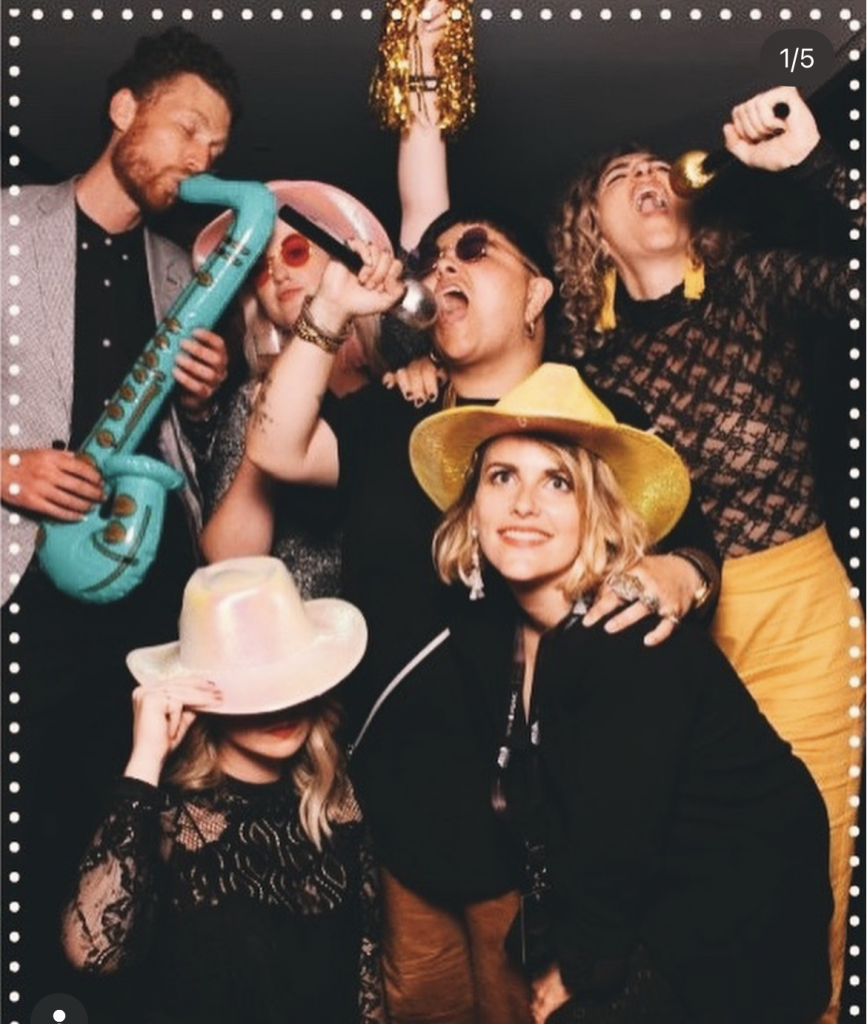
What is your go-to Karaoke song?
I have a couple depending on my mood. My all-time go-to is ‘Show Me Love’ by Robyn – it’s impossible not to belt that one out. But if I’m feeling like a bit of a baddie, I’ll switch it up and go for ‘Work It’ by Missy Elliott.